
by Bryan Perry
June 16, 2026
This past weekend, I attended a conference in New York City where quantum computing was the focus. High-profile speakers on the topic included Kevin O’Leary of Shark Tank, former Trump Chief of Staff Mike Mulvaney, and Fox Business News correspondents Liz Clayman and Charles Payne.
The thrust of the conference centered on “Q-Day,” a hugely important timeline estimating when quantum computing models will be able to break through highly protected layers of encryption. I came away pretty glassy eyed from this event covering the imminent threat and whatever the real-life implications may be.
The “Q” in Q-Day refers to Quantum, specifically to the timeline of when a quantum computer becomes powerful enough to shatter the standard cryptographic algorithms protecting nearly all modern digital data. For years, Q-Day was treated like some sort of distant “Y2K”-style ghost story. However, a significant acceleration in quantum physics and engineering has turned Q-Day into a pressing deadline.
With major technology firms aggressively pulling forward their internal post-quantum migration deadlines, a quiet panic is unfolding in the cybersecurity world. The current digital world relies heavily on asymmetric public-key encryption algorithms like RSA and ECC. These systems work because they are based on incredibly difficult math problems, specifically factoring the product of two enormous prime numbers or computing discrete logarithms. For a classical computer, testing every possible combination would take thousands of years, since stored data seems so safe, because cracking it simply takes too much time.
Quantum computers throw those classical limitations out the window. Instead of processing information using binary bits (0’s or 1’s), they utilize quantum bits, or qubits. Thanks to quantum principles like superposition (being in multiple states at once) and entanglement (qubits linking together to exponentially increase processing power), a quantum computer can evaluate millions of possibilities simultaneously.
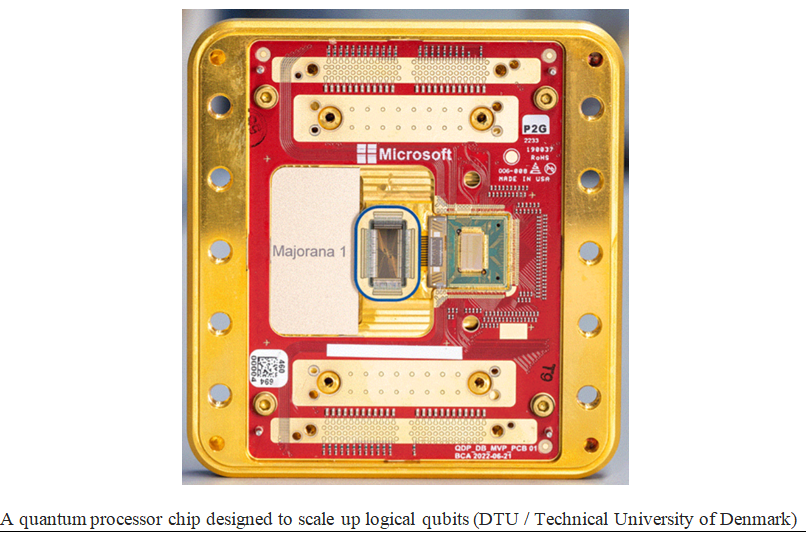
In 1994, mathematician Peter Shor developed an algorithm showing how a sufficiently powerful quantum computer could solve prime-factoring problems in a matter of hours, or even minutes, as algorithmic improvements have sharply dropped the required hardware threshold. Newer architectural designs suggest advanced Qubits could completely dismantle RSA-2048 encryption. Once quantum hardware matches that capability, Shor’s algorithm will render today’s standard encryption obsolete. That crossroad is “Q-Day.”
The most unsettling aspect of Q-Day is that an adversary doesn’t need a quantum computer to victimize you. Malicious actors and hostile nation-states are now engaged in HNDL: Harvest Now, Decrypt Later.
Under this strategy, adversaries intercept and hoard massive amounts of highly encrypted, sensitive data, such as classified state secrets, medical records, and defense blueprints. They cannot read it today, so they store it in vast data centers. The moment they gain access to crypto-analytically relevant quantum computer power, they will run the hoarded data through the machine, retroactively unlocking decades of secrets.
Beyond retroactive data theft, the operational threats of Q-Day include algorithms securing global banking networks, wire transfers, and digital wallets, major system compromises. Smart grids, traffic networks, and industrial control systems rely on digital signatures to verify authentic software updates. A compromised system allows attackers to spoof these signatures and hijack critical infrastructure.
In the crypto world, most blockchain networks and cryptocurrencies rely heavily on ECDSA (Elliptic Curve Digital Signature Algorithm). Without rapid overhaul, private keys can be derived from public keys, leaving digital wallets vulnerable to remote large-scale withdrawals.
Thankfully, the tech world is not sitting idly by. Their primary line of defense against Q-Day is in Post-Quantum Cryptography (PQC), where the goal is not to build a quantum machine, but to redesign our software-based mathematical locks so they are too complex for classical and quantum computers to solve.
The data-defense team is led by the U.S. National Institute of Standards and Technology (NIST), which has finalized core PQC standards (such as ML-KEM for encryption and ML-DSA for digital signatures).
Most of the newly selected PQC standards rely on a branch of mathematics called lattice problems. Instead of hiding keys behind prime numbers, lattice-based cryptography hides secrets inside multi-dimensional geometric structures containing billions of interconnected points. Even with Shor’s algorithm, a quantum computer cannot navigate these infinite geometric mazes efficiently.
Organizations are beginning to implement these standardized algorithms. Tech giants have already integrated early post-quantum protocols into consumer software like iMessage and Google Chrome.
The current gold standard for deployment is Hybrid Cryptography. By running a classical algorithm in parallel with a quantum-resistant one, systems stay compliant with current regulations while gaining an immediate fallback layer of defense against future threats.
Defeating the threat of Q-Day is less about inventing new math and more about managing a massive logistical migration. Upgrading the entire planet’s digital infrastructure will be a grueling process.
Organizations can no longer treat Q-Day as a distant problem. To survive the transition, enterprises must achieve cryptographic agility, abstracting their cryptographic modules so encryption standards can be swapped out rather than a complete code rewrite into a structured, manageable technological upgrade.
There is no fixed calendar date for Q-Day. Because Q-Day represents a specific technological milestone rather than a natural event, it is defined by capability – the moment an adversary develops a quantum computer with enough stable Qubits to break standard public-key encryption.
While government bodies like NIST originally targeted 2035, a wave of research breakthroughs from quantum firms and startups have caused major tech leaders to aggressively accelerate their estimated timelines. IBM’s quantum-safe team, Google, and Cloudflare all updated their internal security roadmaps to target 2029 for full post-quantum migration. Google explicitly pulled its readiness deadline forward by six-years due to rapid advancements in quantum hardware and algorithmic efficiency.
Security agencies and independent risk assessment groups generally evaluate the highest threat window to fall within this 5-year span. Some hyper-conservative government mandates (like parts of the U.S. National Security Agency’s guidelines and the European equivalents) require certain national security systems and critical infrastructure to have quantum-resistant algorithms deployed as early as 2027.
Because of Harvest Now, Decrypt Later (HNDL) attacks, where bad actors can steal encrypted data today to open it when a quantum computer is built, security experts treat the effective date of Q-Day as … right now. The race is fully on to rewrite global encryption standards before the physical hardware catches up.
Navellier & Associates; own Alphabet Inc. Class A (GOOGL) and International Business Machines Corporation (IBM) in managed accounts. We do not own Cloudflare (NET). Bryan Perry does not own Alphabet Inc. Class A (GOOGL), Cloudflare (NET) or International Business Machines Corporation (IBM) personally.
All content above represents the opinion of Bryan Perry of Navellier & Associates, Inc.
Also In This Issue
A Look Ahead by Louis Navellier
The ECB Raises Rates – to Bring Inflation Down?
Income Mail by Bryan Perry
The Countdown to “Q-Day” Begins
Growth Mail by Gary Alexander
Freedom and Capitalism Can Still Boost the Wealth of Nations
Global Mail by Ivan Martchev
This Market Looks Like a “Best-Case Scenario”
Sector Spotlight by Jason Bodner
Elon Musk’s Wealth Soars “To Infinity and Beyond”
View Full Archive
Read Past Issues Here

Bryan Perry
SENIOR DIRECTOR
Bryan Perry is a Senior Director with Navellier Private Client Group, advising and facilitating high net worth investors in the pursuit of their financial goals.
Bryan’s financial services career spanning the past three decades includes over 20-years of wealth management experience with Wall Street firms that include Bear Stearns, Lehman Brothers and Paine Webber, working with both retail and institutional clients. Bryan earned a B.A. in Political Science from Virginia Polytechnic Institute & State University and currently holds a Series 65 license. All content of “Income Mail” represents the opinion of Bryan Perry
Important Disclosures:
Although information in these reports has been obtained from and is based upon sources that Navellier believes to be reliable, Navellier does not guarantee its accuracy and it may be incomplete or condensed. All opinions and estimates constitute Navellier’s judgment as of the date the report was created and are subject to change without notice. These reports are for informational purposes only and are not a solicitation for the purchase or sale of a security. Any decision to purchase securities mentioned in these reports must take into account existing public information on such securities or any registered prospectus.To the extent permitted by law, neither Navellier & Associates, Inc., nor any of its affiliates, agents, or service providers assumes any liability or responsibility nor owes any duty of care for any consequences of any person acting or refraining to act in reliance on the information contained in this communication or for any decision based on it.
Past performance is no indication of future results. Investment in securities involves significant risk and has the potential for partial or complete loss of funds invested. It should not be assumed that any securities recommendations made by Navellier. in the future will be profitable or equal the performance of securities made in this report. Dividend payments are not guaranteed. The amount of a dividend payment, if any, can vary over time and issuers may reduce dividends paid on securities in the event of a recession or adverse event affecting a specific industry or issuer.
None of the stock information, data, and company information presented herein constitutes a recommendation by Navellier or a solicitation to buy or sell any securities. Any specific securities identified and described do not represent all of the securities purchased, sold, or recommended for advisory clients. The holdings identified do not represent all of the securities purchased, sold, or recommended for advisory clients and the reader should not assume that investments in the securities identified and discussed were or will be profitable.
Information presented is general information that does not take into account your individual circumstances, financial situation, or needs, nor does it present a personalized recommendation to you. Individual stocks presented may not be suitable for every investor. Investment in securities involves significant risk and has the potential for partial or complete loss of funds invested. Investment in fixed income securities has the potential for the investment return and principal value of an investment to fluctuate so that an investor’s holdings, when redeemed, may be worth less than their original cost.
One cannot invest directly in an index. Index is unmanaged and index performance does not reflect deduction of fees, expenses, or taxes. Presentation of Index data does not reflect a belief by Navellier that any stock index constitutes an investment alternative to any Navellier equity strategy or is necessarily comparable to such strategies. Among the most important differences between the Indices and Navellier strategies are that the Navellier equity strategies may (1) incur material management fees, (2) concentrate its investments in relatively few stocks, industries, or sectors, (3) have significantly greater trading activity and related costs, and (4) be significantly more or less volatile than the Indices.
ETF Risk: We may invest in exchange traded funds (“ETFs”) and some of our investment strategies are generally fully invested in ETFs. Like traditional mutual funds, ETFs charge asset-based fees, but they generally do not charge initial sales charges or redemption fees and investors typically pay only customary brokerage fees to buy and sell ETF shares. The fees and costs charged by ETFs held in client accounts will not be deducted from the compensation the client pays Navellier. ETF prices can fluctuate up or down, and a client account could lose money investing in an ETF if the prices of the securities owned by the ETF go down. ETFs are subject to additional risks:
- ETF shares may trade above or below their net asset value;
- An active trading market for an ETF’s shares may not develop or be maintained;
- The value of an ETF may be more volatile than the underlying portfolio of securities the ETF is designed to track;
- The cost of owning shares of the ETF may exceed those a client would incur by directly investing in the underlying securities; and
- Trading of an ETF’s shares may be halted if the listing exchange’s officials deem it appropriate, the shares are delisted from the exchange, or the activation of market-wide “circuit breakers” (which are tied to large decreases in stock prices) halts stock trading generally.
Grader Disclosures: Investment in equity strategies involves substantial risk and has the potential for partial or complete loss of funds invested. The sample portfolio and any accompanying charts are for informational purposes only and are not to be construed as a solicitation to buy or sell any financial instrument and should not be relied upon as the sole factor in an investment making decision. As a matter of normal and important disclosures to you, as a potential investor, please consider the following: The performance presented is not based on any actual securities trading, portfolio, or accounts, and the reported performance of the A, B, C, D, and F portfolios (collectively the “model portfolios”) should be considered mere “paper” or pro forma performance results based on Navellier’s research.
Investors evaluating any of Navellier & Associates, Inc.’s, (or its affiliates’) Investment Products must not use any information presented here, including the performance figures of the model portfolios, in their evaluation of any Navellier Investment Products. Navellier Investment Products include the firm’s mutual funds and managed accounts. The model portfolios, charts, and other information presented do not represent actual funded trades and are not actual funded portfolios. There are material differences between Navellier Investment Products’ portfolios and the model portfolios, research, and performance figures presented here. The model portfolios and the research results (1) may contain stocks or ETFs that are illiquid and difficult to trade; (2) may contain stock or ETF holdings materially different from actual funded Navellier Investment Product portfolios; (3) include the reinvestment of all dividends and other earnings, estimated trading costs, commissions, or management fees; and, (4) may not reflect prices obtained in an actual funded Navellier Investment Product portfolio. For these and other reasons, the reported performances of model portfolios do not reflect the performance results of Navellier’s actually funded and traded Investment Products. In most cases, Navellier’s Investment Products have materially lower performance results than the performances of the model portfolios presented.
This report contains statements that are, or may be considered to be, forward-looking statements. All statements that are not historical facts, including statements about our beliefs or expectations, are “forward-looking statements” within the meaning of The U.S. Private Securities Litigation Reform Act of 1995. These statements may be identified by such forward-looking terminology as “expect,” “estimate,” “plan,” “intend,” “believe,” “anticipate,” “may,” “will,” “should,” “could,” “continue,” “project,” or similar statements or variations of such terms. Our forward-looking statements are based on a series of expectations, assumptions, and projections, are not guarantees of future results or performance, and involve substantial risks and uncertainty as described in Form ADV Part 2A of our filing with the Securities and Exchange Commission (SEC), which is available at www.adviserinfo.sec.gov or by requesting a copy by emailing info@navellier.com. All of our forward-looking statements are as of the date of this report only. We can give no assurance that such expectations or forward-looking statements will prove to be correct. Actual results may differ materially. You are urged to carefully consider all such factors.
FEDERAL TAX ADVICE DISCLAIMER: As required by U.S. Treasury Regulations, you are informed that, to the extent this presentation includes any federal tax advice, the presentation is not written by Navellier to be used, and cannot be used, for the purpose of avoiding federal tax penalties. Navellier does not advise on any income tax requirements or issues. Use of any information presented by Navellier is for general information only and does not represent tax advice either express or implied. You are encouraged to seek professional tax advice for income tax questions and assistance.
IMPORTANT NEWSLETTER DISCLOSURE:The hypothetical performance results for investment newsletters that are authored or edited by Louis Navellier, including Louis Navellier’s Growth Investor, Louis Navellier’s Breakthrough Stocks, Louis Navellier’s Accelerated Profits, and Louis Navellier’s Platinum Club, are not based on any actual securities trading, portfolio, or accounts, and the newsletters’ reported hypothetical performances should be considered mere “paper” or proforma hypothetical performance results and are not actual performance of real world trades. Navellier & Associates, Inc. does not have any relation to or affiliation with the owner of these newsletters. There are material differences between Navellier Investment Products’ portfolios and the InvestorPlace Media, LLC newsletter portfolios authored by Louis Navellier. The InvestorPlace Media, LLC newsletters contain hypothetical performance that do not include transaction costs, advisory fees, or other fees a client might incur if actual investments and trades were being made by an investor. As a result, newsletter performance should not be used to evaluate Navellier Investment services which are separate and different from the newsletters. The owner of the newsletters is InvestorPlace Media, LLC and any questions concerning the newsletters, including any newsletter advertising or hypothetical Newsletter performance claims, (which are calculated solely by Investor Place Media and not Navellier) should be referred to InvestorPlace Media, LLC at (800) 718-8289.
Please note that Navellier & Associates and the Navellier Private Client Group are managed completely independent of the newsletters owned and published by InvestorPlace Media, LLC and written and edited by Louis Navellier, and investment performance of the newsletters should in no way be considered indicative of potential future investment performance for any Navellier & Associates separately managed account portfolio. Potential investors should consult with their financial advisor before investing in any Navellier Investment Product.
Navellier claims compliance with Global Investment Performance Standards (GIPS). To receive a complete list and descriptions of Navellier’s composites and/or a presentation that adheres to the GIPS standards, please contact Navellier or click here. It should not be assumed that any securities recommendations made by Navellier & Associates, Inc. in the future will be profitable or equal the performance of securities made in this report.
FactSet Disclosure: Navellier does not independently calculate the statistical information included in the attached report. The calculation and the information are provided by FactSet, a company not related to Navellier. Although information contained in the report has been obtained from FactSet and is based on sources Navellier believes to be reliable, Navellier does not guarantee its accuracy, and it may be incomplete or condensed. The report and the related FactSet sourced information are provided on an “as is” basis. The user assumes the entire risk of any use made of this information. Investors should consider the report as only a single factor in making their investment decision. The report is for informational purposes only and is not intended as an offer or solicitation for the purchase or sale of a security. FactSet sourced information is the exclusive property of FactSet. Without prior written permission of FactSet, this information may not be reproduced, disseminated or used to create any financial products. All indices are unmanaged and performance of the indices include reinvestment of dividends and interest income, unless otherwise noted, are not illustrative of any particular investment and an investment cannot be made in any index. Past performance is no guarantee of future results.