
by Gary Alexander
November 17, 2026
My first major global financial analysis in a major publication came out in late 1967 (cited below). Now, nearly 60-years later, this is my last column for Marketmail, so let me claim an old geezer’s prerogative to share investment lessons from my first 80 circumnavigations of old Sol and then bid you a fond farewell.
Lesson #1 (1945): Doomsday Never Arrived – So: Invest as If Mankind Will Keep Growing in Prosperity
I was born early on July 15, 1945, the day before J. Robert Oppenheimer and his team set off the first atomic bomb in Alamogordo, New Mexico. That atomic power was soon loosed on Japan, ending World War II, but atomic weapons have not been used in war since then, despite the constant warnings of books, novels and nuclear scientists, who have kept setting their Doomsday Clock at a few minutes (or seconds) before midnight ever since 1950. In fact, their Doomsday Clock is now just 85-seconds (down from 89 last year), the closest it has been to midnight, representing their ongoing fears of a global catastrophe.

Graphs are for illustrative and discussion purposes only. Please read important disclosures at the end of this commentary.
On July 16, 1945, President Harry S. Truman was in Potsdam, Germany, when the A-bomb exploded. To code that event, the President’s team told him, “Baby Boy Born. Eyes Bright. Can hear him cry (from 50-miles away) and see him from (200-miles away),” referring to the bomb’s radius – and perhaps my birth!
On the day that first A-bomb exploded, Oppenheimer was a bear, and the New York Times was bullish:
“I am become death, the shatterer of worlds.” — J. Robert Oppenheimer, the bomb’s chief architect.
“I feel privileged to…be present at the moment of the Creation, when the Lord said: Let there be Light.”
— William L. Laurence of the New York Times, on seeing the first A-bomb explosion.
Lesson #1: Predicted doomsday events seldom happen, so overly fearful bears fail to invest in growth.
Lesson #2 (1950s): Keep Reading Widely, Especially History (and Finance)
As I finished my first decade, several events happened in July 1955. On July 9, Bill Haley & the Comets soared to #1 on the hit parade (for seven weeks) with “Rock Around the Clock,” the rock era’s H-bomb event, but I preferred big bands, jazz and Sinatra. A week later, Anaheim’s Disneyland opened, billed the “Happiest Place on Earth.” In its first year, four million visited Adventureland, Frontierland, Fantasyland and Tomorrowland. Opening day featured Walt Disney, Art Linkletter, Ronald Reagan, and huge crowds.
That summer, my parents bought a complete set of the World Book encyclopedias, and I don’t think I emerged from reading or scanning every article within a year or two, reproducing the economic charts as school projects and virtually memorizing all the key production statistics for crops and natural resources.
I quickly graduated to devouring TIME Magazine, cover-to-cover each week, and dad’s college physics textbooks, or anything with print. Since then – each year since at least the 1960s – I have read at least 100 books a year, focusing on history and economics, showing how we overcome crises and keep growing.
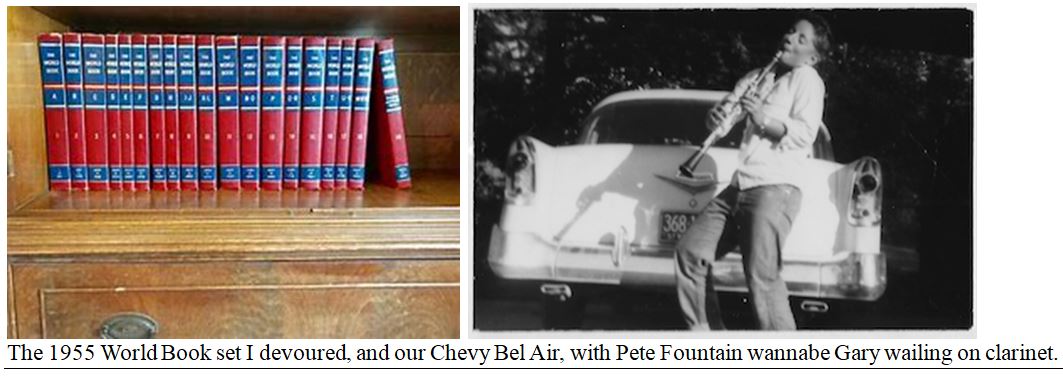
All this early reading – and an obsession to share it with others – led to reams of “extra credit” reports in high school, including a lengthy weekly analysis of major news magazine articles and a term paper on the rise of a united European Economic Community, running 42 pages with over 100 footnotes – in 1963.
After graduating from college in 1967, my first deep research into global economics came in late 1967, as published in a national magazine two-months later. It was the first of a series of three in-depth articles on Japan’s rising economic dominance. The first article was titled “Japan: Industrial Supergiant,” opening.
“In 20-short years, Japan has emerged from the smoking ruins of World War II to become the Supergiant of the Orient. She ranks third in the world — behind only America and Russia — in Industrial Output … This story of Japan’s economic rebirth is nothing short of phenomenal.”
This was the first of hundreds of research reports I’ve written for a variety of publications in the last 60-years. For the same magazine, I wrote reports on the Dollar Crisis, the Great Depression, the Entitlements Explosion, the Gold Standard, and principles of investing and saving, leading to the major life lesson #3:
Lesson #3 (1960s): Start Investing in Your 20s – By Cutting Costs to the Bone
In July 1965, the erosion of our currency began, launching six-decades of inflation. With a powerful 68% majority in both Houses of Congress in 1965, LBJ could do whatever he wanted – and did. One early LBJ move was a Coinage Act, signed into law July 23, 1965, part of his plan to fund Guns, Butter, Rockets, and more! Then, silver dimes and quarters disappeared into private hoards, while cheap alloys circulated.
In the mid-1960s, I worked my way through college, as did my wife-to-be, and we paid off our college debts within a year of graduation. It can still be done. We have helped explain this process to our children and grandkids, and our two eldest grandsons graduated college debt-free, in 2018 and 2019. One key is to stay at home the first two years, doing so well at extension campuses or junior colleges that you can earn scholarships for your last two years in a major college, all while working and cutting costs to the bone.

Marrying young in 1968, with three kids arriving by 1972, we had to be especially cost-cutting in all our needs, finding a $75 rental first, then buying a home in Pasadena for under $20,000, with a $129 monthly mortgage nut. Our big treat was splitting a quart of 29-cent beer each Friday night. We made a game of it.
That left us a few dollars to invest, when stock prices (and most other assets) were ridiculously low. At our 1968 wedding, Aunt Margie gave us 10 shares of a glamour “Nifty Fifty” stock, and we held it until I finally had to bail out in 1974, near the bottom of a bear market, as that stock (after mergers) kept rising.
Lesson #4 (1970s): Don’t “Sell too Soon,” Unless the Numbers (Seem to) Work Out
The 1970s were a rough time to invest and support a family on one salary. The nation was in a blue funk over Vietnam, Watergate, high inflation and more. We even bailed out on moon shots. On July 24, 1975, Apollo 18 returned to Earth, six years to the day after Apollo 11 returned – the end of all moon shots.
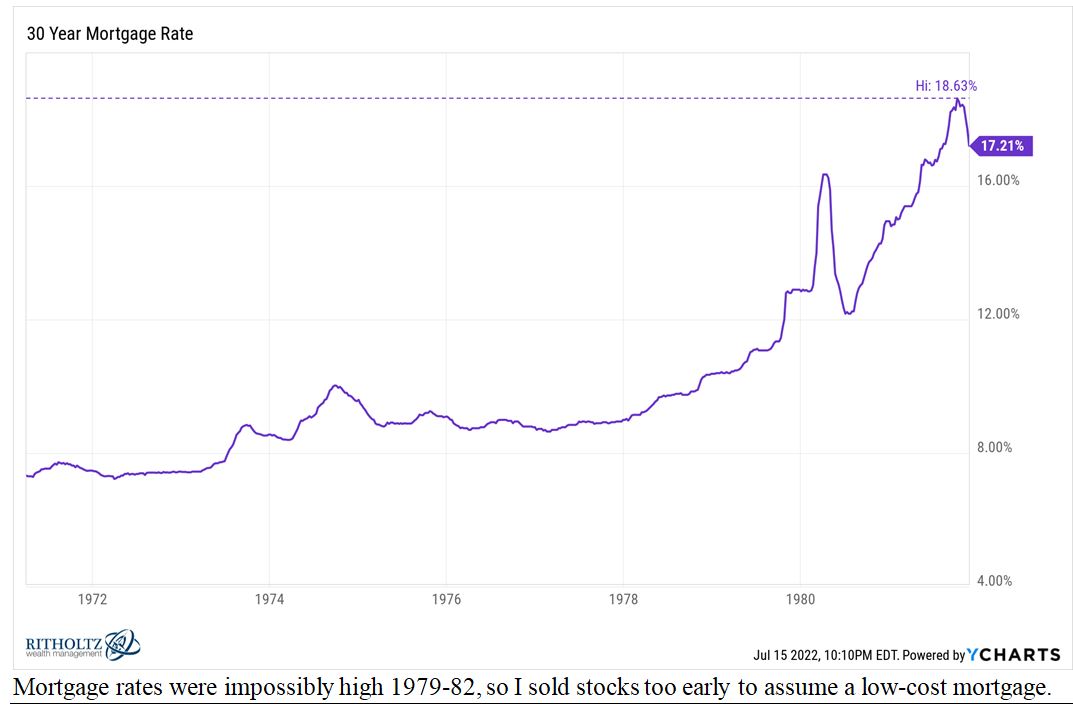
In 1979, we sold our Pasadena home, and I cashed in my TIAA-CREF account at USC, worth $8,000, minus penalties, to assume a low-cost mortgage in Virginia to begin my investment newsletter career.
At the time, mortgage rates were soaring, rising from 16% when we shopped around, to a peak of 18.6%. To buy a home in that market seemed like financial suicide to this penny-pinching economist, so I cashed in my TIAA retirement account to pay a huge amount (putting 20% down, or about $35,000) to assume a mortgage at much lower rates (under 8%, not over 18%), bringing our monthly payments down to $389.
Graphs are for illustrative and discussion purposes only. Please read important disclosures at the end of this commentary.
It seemed smart at the time, but if I had been patient, leaving that $8,000 in TIAA-CREF untouched, it would likely approach the 60-fold S&P gains since then, so that $8,000 retirement account, all alone and untouched, could very likely be worth over $500,000 today, so it seems I made a mistake cashing out.
Lesson #5 (in the 1980s): The Bears May Roar, but the Bulls Make Money
In 1980, I began my 45-year career in the investment newsletter business, first by serving as Consulting Editor to Personal Finance in Alexander, Virginia. This gave me a chance to edit the advice of dozens of top professionals in the financial newsletter business. Doug Casey, one of the other Consulting Editors was author of the #1 financial best-seller that year, “Crisis Investing.” He argued for a coming “Greater Depression” while the other Consulting Editor, Mark Skousen, boldly predicted, “Reaganomics Will Work,” turning the market around. For two or more years, Casey seemed right, then the Reagan tax cuts and deregulation turned Skousen into the winner. This taught me patience, to weigh the arguments on both sides, but mostly to let the market decide – and it did so, decisively, for the next 15-years and more.
My first investment seminar duties came offshore with four seminars across the Caribbean and Canada in 1981, and I have since moderated panels and served as MC for over 100-seminars, mostly in New Orleans (43), Freedom Fest (20), Atlanta (15), Switzerland (14), Money Shows (12) and many investment cruises.
New Orleans speakers were primarily bearish on stocks and bullish on gold, which didn’t work well in the 1980s, and I didn’t make much money then, but I had the good sense to listen to bullish exhibitors (and speakers) in New Orleans – most notably Louis Navellier and John Dessauer – who helped turn my mind around to think more positively about stocks, while maintaining a small balancing position in gold.
I didn’t wise up fast enough – I missed out on the 1980s gains, but the relentless teachings (and success) of these few bulls turned me around before the end of the decade, and I have been a perma-bull in stocks since 1989. Even though I was late to the game – at age 44 in 1989 – that change made a huge difference.
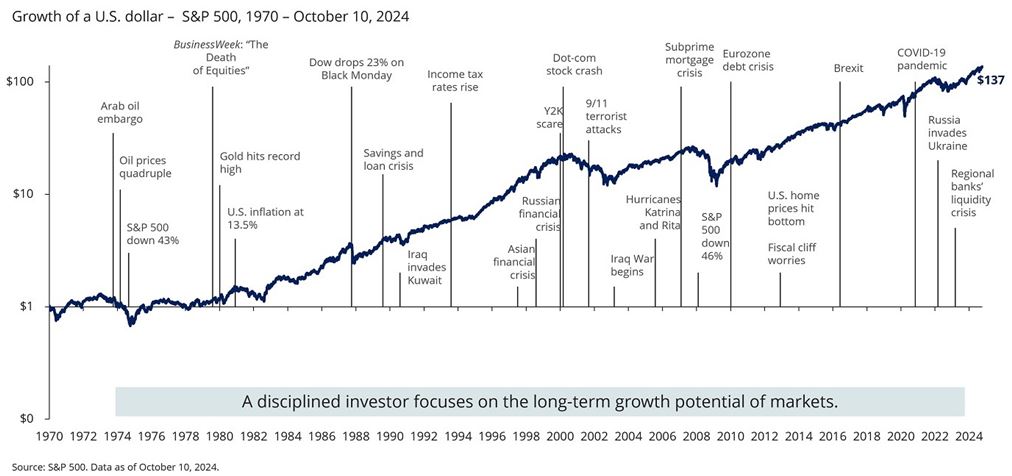
In the first half of my life, to 1985, the S&P rose 1,245%, but the market did much better in my second 40-years, up over 30-fold since I began to invest in stocks in the late 1980s. The S&P is up over 500-fold since 1945, not counting dividends or inflation, which tend to cancel each other out.
Here are the benefits of being a bull since the end of World War II.
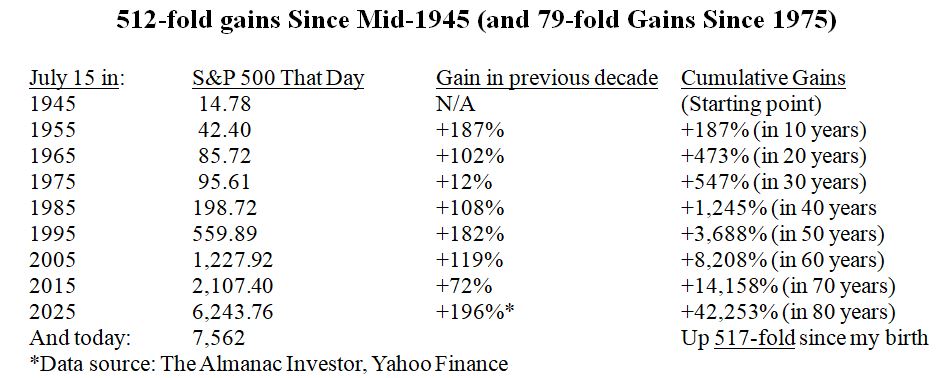
CPI inflation is up 18-fold since 1945, so the real gain in the last 81-years is “only” 28-fold, but that doesn’t include dividends. Using the Inflation Calculator, a $100 investment at the start of 1945, with dividends invested, is worth $755,462 in 2026, an 11.54% annual return, or 7.61% per year after inflation.
Lesson #6: When the Bulls Run, There’s “Pamplona Power” on Wall Street
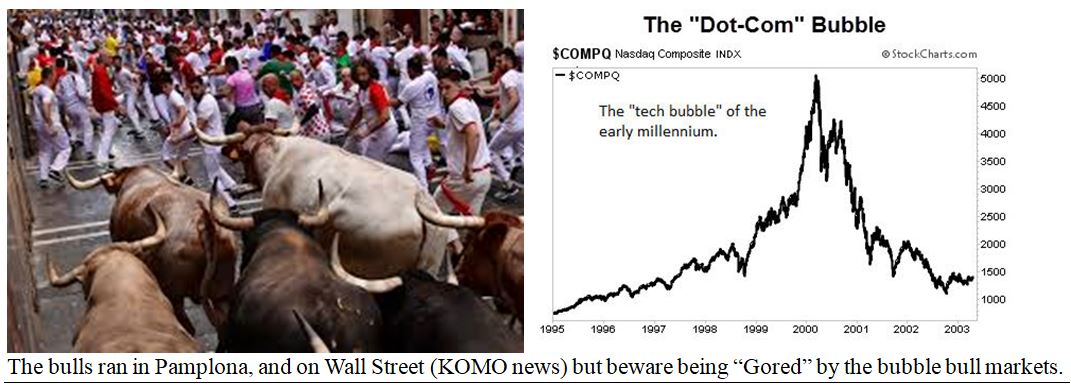
You never know when the market will rise or fall – or bore you to tears for years. Soon after turning perma-bull in 1989, the Dow did not make a move of 100-points or more any day for four-years, from November 15, 1991 to December 18, 1995. In four calendar years, 1992 to 1995, the Dow changed by 2% or more on only five (0.5%) of 1,000-trading days. Markets then seemed to be in a permanent siesta, but the market finally woke up to cash in on the peace dividend by hoovering up technology stocks in the late 1990s:
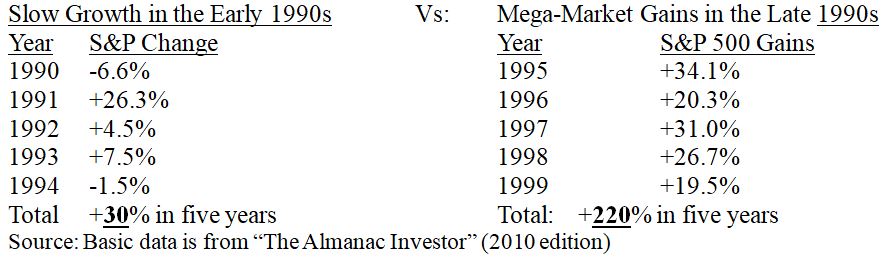
Clinton’s second term was a bonanza for stocks, but not in his first two-years. After the 1994 Republican Revolution, stocks soared, 1995-2000, as “Pamplona Power” prevailed, and El Toro Grande roared.
As I’ve said (above), I never really got into the stock market until 1989, but I was “all in” in a committed way after that, in ups and downs. The early 1990s torpor didn’t concern me. In 1995, dad let me manage his retirement account – he was mostly in bonds and gold – and I switched to stocks (with help from my affiliation with some great advisors) and found some superb stock gainers for both my dad and our family.
Graphs are for illustrative and discussion purposes only. Please read important disclosures at the end of this commentary.
As the above chart shows, NASDAQ became a classic bubble, shooting up too far too fast, then falling to 5-year lows by early 2003. However, the more stable market indexes barely felt the blip of the flat 1970s and early 2000s, but longer-term (next chart), for each dollar invested in 1970, investors would now have about $140, despite two long slumps, 1970 to 1982, and then 2000 to 2009, which both seemed endless.
Graphs are for illustrative and discussion purposes only. Please read important disclosures at the end of this commentary.
Lesson #7: Be Part of the Solution – and Have Fun Doing It!
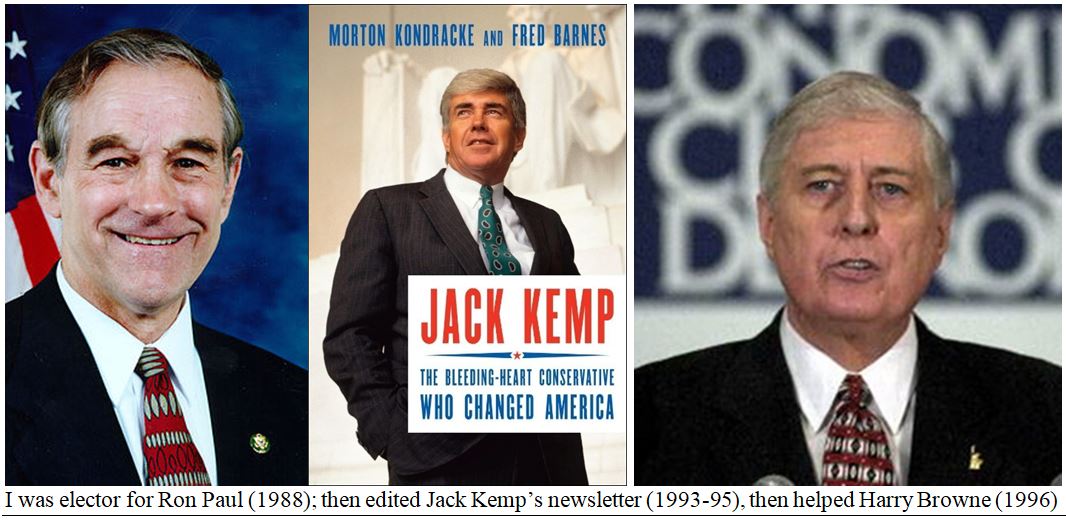
A second big lesson from the 1990s was that capitalism crushed communism, big time – a trend that became clear after the surprise fall of the Berlin Wall in late 1989. Especially after that world-changing event, I wanted to be part of the solution, first by editing a newsletter authored by that “bleeding-heart conservative” Jack Kemp, from Buffalo (before he ran for Vice-President in 1996). Then, I served on the finance committee of Libertarian presidential candidate, Harry Browne, one of my favorite authors.
Considering today’s political morass, one of my most exciting years was running for office in the Virginia State House of Delegates in 1997. I knew (even hoped) I would lose to a 10-time Democrat incumbent, but the process was a thrill, a chance to face questions from all ages– from high schools to TV debates.
At the same time, I gained proximity to other politicians and their policies and noticed a wonderful trend from both parties of talking peacefully together to create real solutions. (Yes, that once happened!) To his credit, President Clinton admitted the mistakes of his first term and said, “The era of big government is over” and “we must end welfare as we know it,” and he did…both. He and Speaker Newt Gingrich with a strong Republican Congress passed capital gains tax cuts, spending cuts and staff cuts and pro-business acts creating four straight budget surpluses, 1997-2001, something that was not done for over 80-years.
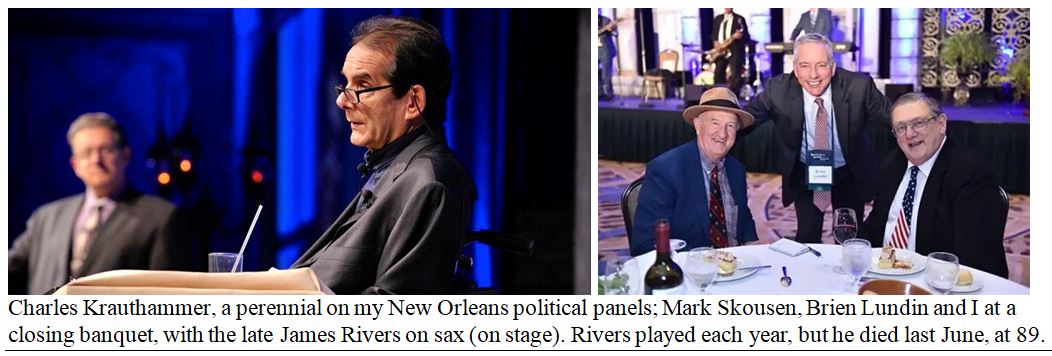
The payoff is that I was able to chair some fascinating political panels over the next quarter century, most notably at the New Orleans Investment Conference, for which I give thanks to Brien Lundin, conference director there after the passing of founder Jim Blanchard at age 55 in early 1999. Our panelists were usually a top Republican (conservative), a top Democrat (liberal) and a Libertarian. I have many great memories from those debates, as we were always animated, respectful and focused on core principles.
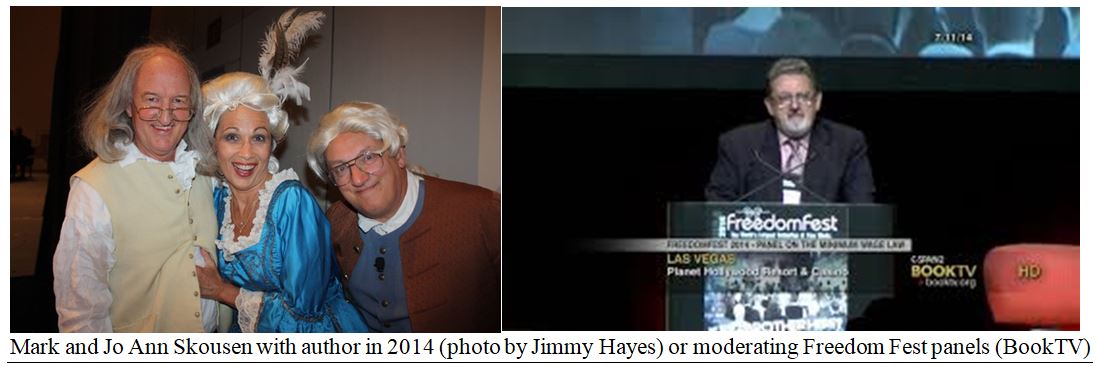
In parallel conferences, Mark and Jo Ann Skousen and I formed the “Freedom Fest Players” to bring American history alive, with stagings of selections from 1776, Camelot and the French Revolution with Franklin in Paris, with Mark as Ben Franklin, wife Jo Ann as Madame de Stael and me as John Adams:
Going beyond these historical events, I have always advocated citizens do their part to make this nation great, by helping those in need or by starting a charity, not by relying on politicians of any stripe to do it all (as in, “Ask not what your country can do for you, but what you can do for our country.” – JFK, 1961).
Lesson 8: Don’t Invest Your Age – Follow Market Fundamentals
Lesson #8-Don’t mindlessly “invest your age,” especially if you know what you’re doing. Investment textbooks say you should subtract your age from 100 (that’s 19 for me) and only invest that much (19%) in stocks. The rest (81%) should be in bonds. Recently, I reluctantly upped my bond percentage to maybe 30%, but I refuse to go out to pasture. Warren Buffett and Charlie Munger never slowed down after age 80. They kept investing in good stocks, in businesses they understood, rather than clip bond coupons.
Consider the times more than your age. Would it make sense to be 75% in stocks in 1929, if you were then age 25? No way. Would it make sense for my dad to be 20% in stocks and 80% in bonds at age 80 in 1997, in a bull market? No way, so I put him in growth stocks and his portfolio soared in the late 1990s. My Depression-era dad, who nearly starved in the 1930s, died a millionaire in 2001, with a beatific smile…
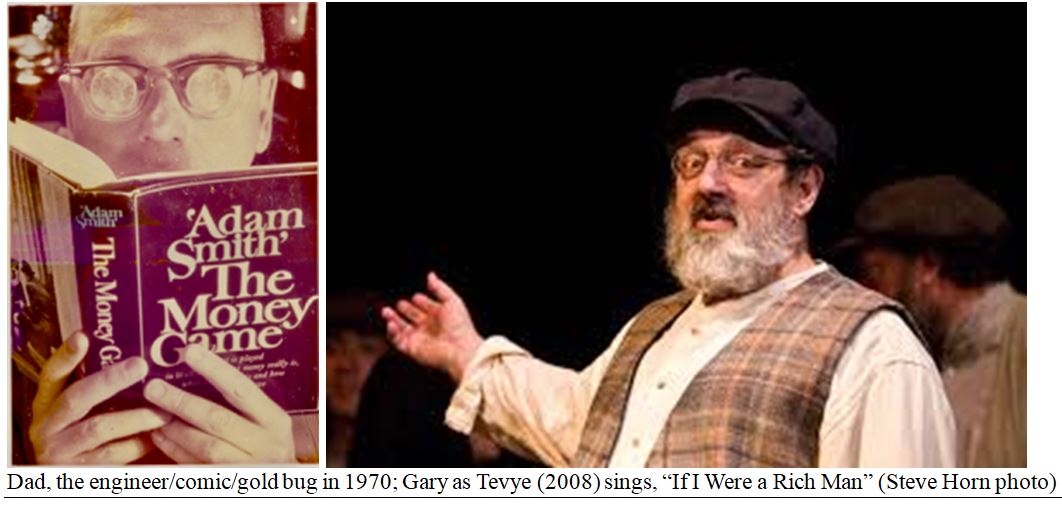
I ended my 45-year investment seminar career this year, as travel has become too much of a hassle for these old bones. The 50th New Orleans conference was my 43rd and last, and the 2026 Freedom Fest was my last, as I got to play John Adams again for “America 250.” Along the way, I learned a huge amount from speakers at both events, especially when I served as moderator for some of our greatest thinkers.
As for any portfolio shifts, age 80 is the time keep growing a portfolio while also “shrinking it,” through minimum annual distributions in retirement accounts. We keep growing by investing in growth stocks instead of the way octogenarians are ‘supposed to” behave, by clipping “bond coupons” for income.
P.S. Since writing most of the above in 2025, I’ve added some tree rings, so here are two added lessons:
Lesson #9-Don’t chase glamour stocks and fads. I won’t name names, but I like to invest in businesses I understand and can champion their cause. I don’t like a lot of speculations in the small-cap arena. I invest in mid-cap stocks – Goldilocks size – neither too big nor too small, established, but with room to grow.
Lesson #10-Forget market timing. We’re not that smart. Don’t “Sell in May and go away,” or “Sell in July and wonder why.” Keep riding winners while maybe taking 50% of profits in a stock that soared too far too fast. Keep studying markets and human behavior but don’t try to pinpoint market tops or bottoms. The reversal is too fast and too vicious. You can’t easily exit a bear market at a good price. Neither would I chase a bubble by buying more at nosebleed levels. Let your winners run – until you need the money.
Happy and successful investing – and thank you for enduring some of my family albums in this farewell.
As Edward R. Murrow ended his shows, in my blessed youth, “Good Night and Good Luck.”
All content above represents the opinion of Gary Alexander of Navellier & Associates, Inc.
Also In This Issue
A Look Ahead by Louis Navellier
The Latest News from Nvidia and Other Leading Tech Companies
Income Mail by Bryan Perry
AI’s Disinflationary Power Fuels a Virtuous Cycle
Growth Mail by Gary Alexander
Investment Lessons After Nearly 60 Years in the Game
Global Mail by Ivan Martchev
Nvidia’s $2 Trillion Soap Opera
Sector Spotlight by Jason Bodner
The Washout Is Done. History Says “Look Up”
Important Disclosures:
Although information in these reports has been obtained from and is based upon sources that Navellier believes to be reliable, Navellier does not guarantee its accuracy and it may be incomplete or condensed. All opinions and estimates constitute the authors opinions as of the date the report was created and are subject to change without notice. These reports are for informational purposes only and are not a solicitation for the purchase or sale of any securities or financial services. Any decision to purchase securities mentioned in these reports must take into account existing public information on such securities or any registered prospectus. To the extent permitted by law, neither Navellier & Associates, Inc., nor any of its affiliates, agents, or service providers are providing any investment advice herein and do not assume any liability or responsibility for the readers’ decisions if any. No reader should act or refrain from acting in reliance on the information contained in this communication or for any decision based on it.
None of the stock information, data, or company information presented herein constitutes investment advice or a recommendation by Navellier or a solicitation to buy or sell any securities. Any specific securities identified and described herein do not represent any investment advice.
Information presented is general information that does not take into account your individual circumstances, financial situation, or needs, nor does it present a personalized recommendation to you. Individual stocks presented may not be suitable for every investor. Investment in securities involves significant risk and has the potential for partial or complete loss of funds invested. Investment in fixed income securities has the potential for the investment return and principal value of an investment to fluctuate so that an investor’s holdings, when redeemed, may be worth less than their original cost.
- This report contains statements that are, or may be considered to be, forward-looking statements. All statements that are not historical facts, including statements about our beliefs or expectations, are “forward-looking statements” within the meaning of The U.S. Private Securities Litigation Reform Act of 1995. These statements may be identified by such forward-looking terminology as “expect,” “estimate,” “plan,” “intend,” “believe,” “anticipate,” “may,” “will,” “should,” “could,” “continue,” “project,” or similar statements or variations of such terms. Our forward-looking statements are based on a series of expectations, assumptions, and projections, are not investment advice. All of our forward-looking statements are as of the date of this report only.
- Federal Tax Advice Disclaimer: As required by U.S. Treasury Regulations, you are informed that, to the extent this presentation mentions any federal taxes, Navellier is not presenting any tax advice and should not be used or relied on as tax advice. Navellier does not advise on any income tax requirements or issues. Use of any information presented by Navellier is for general information only and does not represent tax advice either express or implied. You are encouraged to seek professional tax advice for income tax questions and assistance.
- FactSet Disclosure: Navellier does not independently calculate the statistical information included in the attached report. The calculation and the information are provided by FactSet, a company not related to Navellier. Although information contained in the report has been obtained from FactSet and is based on sources Navellier believes to be reliable, Navellier does not guarantee its accuracy, and it may be inaccurate, incomplete or condensed. The report and the related FactSet sourced information is for general information purposes only.